
Accounts Receivable Aging Report
Run an Accounts Receivable Aging report to obtain a detailed aging of each patient account, separated by contract. The report includes the account balance, amount due, and aging for each responsible party and insurance detail. You can choose to include or omit $0 contracts, and / or insurance contracts. When they are included, insurance contracts are preceded by the letters Ins: before the responsible party name to separate them visually from the responsible party contracts. The report features a pie chart that shows the percentage of amounts due in each aging category for the selected patients. In addition to the chart, the report lists each patient's name, status, responsible party name, home and work phones, total amount due, aging by number of days past due, total number of days past due, balance, amount of last receipt, and date of last receipt. The total amount of each figure is printed on the last page of the report. Due to the large number of columns required by the report, it prints in landscape mode (sideways).
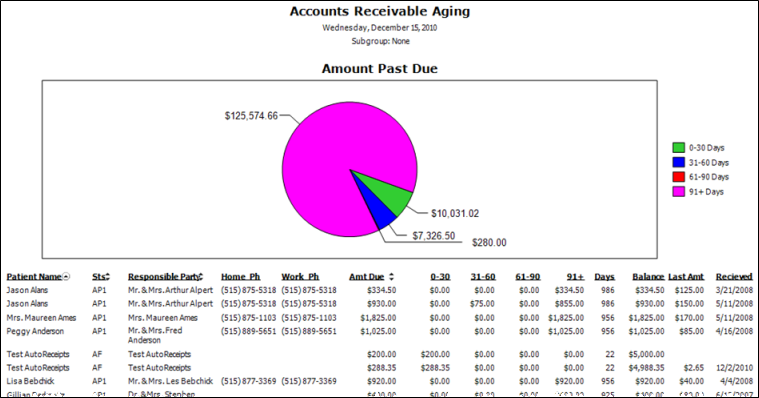
Responsible Party Aging vs. Insurance Company Aging Reports - This article describes running the Accounts Receivable Aging report for responsible parties: To run a similar report for insurance companies, run the Insurance Accounts Receivable Aging - By Company report instead.
Running the Report for "Today" - When you run the Accounts Receivable Aging report for "today", Edge Cloud calculates the results from each patient's ledger, as of that moment in time. So, if you run the report, then post some receipts and run the report again, the aging of affected patients' accounts may be different, even without finalizing your transactions.
Running the Report for a Past Date - When you run the Accounts Receivable Aging report for a date in the past, Edge Cloud calculates the results from the date the charges and receipts were finalized, not necessarily when they were posted. So, if you do not finalize transactions every day, the report results will show you generalized numbers, but not with detailed accuracy.
Subgrouping Past Dates Not Advised - When you run an Accounts Receivable Aging report for a past date, do not attempt to use a financial subgroup. Subgroups look at accounts as they currently are, not as they were. So, if you use a subgroup to, for example, exclude patients with $0 balance, the results will exclude patients that currently have a $0 balance, not necessarily those who had a $0 balance in the past. Instead, use the Exclude Insurance Contracts and Exclude Zero Dollar Balances options within the report settings.
Open the Report
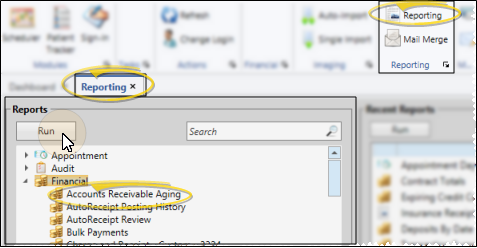
Select Reporting from the Reporting section of the Home ribbon bar. Then from the Financial section, open the Accounts Receivable Aging report. (You can also use the Search field to find the report you want to work with.) You might also be able to run this report or form from your Recent Reports or Quick Reports list. See "Run Edge Cloud Reports" for details.
Report Settings
Select the options to use for choosing records and generating this report. Choose carefully, as your selections will affect which data is included in the report. (If the report settings panel is not visible, click the Show/Hide icon in the upper left corner of the Reporting window.)
Date - Choose the date to use. You can type a date in the Date field, or click the v button to select a date from a calendar. You can also enable the Today option to use today's date. If Today is enabled, you cannot type a date or open the calendar: Disable the Today option first if you want to choose a specific date. The date or you select will appear just under the report title; if you select a date that is not "today", this date will be different from the run date that appears in the report header.
Exclude Insurance Contracts - Enable this option to include only the financial data from responsible party accounts on the report. If this option is disabled, all accounts, including insurance accounts, that fit your subgroup will be included in the report. (You can also print the Insurance AR Aging report to generate a report of only insurance account aging.)
Exclude Zero Dollar Balances - Enable this option to omit accounts with no balance (and are therefor not past due) from the report.
Office - Choose to include only the records for a specific office, or include the records for all office locations in your practice.
Orthodontist / Doctor - Choose to include only the records for a specific orthodontist / doctor, or include the records for all orthodontists in your practice.
Specialty - If you have Edge Specialist, you can choose to include only records for a specific specialty, or include the records for all specialties in your practice.
View Report Results
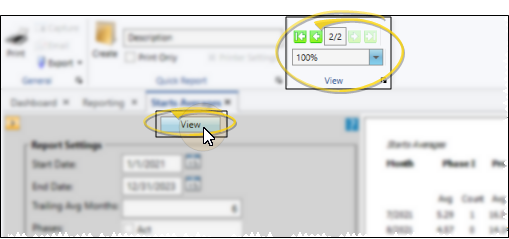
If needed, click View at the top of the report settings panel to view the results on your screen. When you run a report or form from your Recent Report list, or when you run a Quick Report, the initial results are sent to your screen immediately, with one exception: A Quick Report that has the Print Only option enabled will not show your results on the screen at all, but continue with the printing options. You can use the arrows in the View section of the ribbon bar to view additional pages of a multiple-page report. You can also use the dropdown button or type a number in the zoom field to change the size of the report in your window.
Report Title & Header
Whether you view the report on your screen or print it, the report title and run date appear in the header of each report page. If you used subgrouping or other report options, that information appears just under the report title so you know which criteria was used to generate the results.
Show / Hide Details
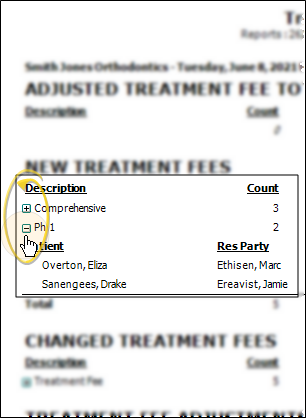
If this report supports showing / hiding the details that comprise report totals, you can click the expand / collapse icons to show / hide the details. Not all Edge Cloud reports support this feature. If your cursor changes to look like a hand, the feature is available.
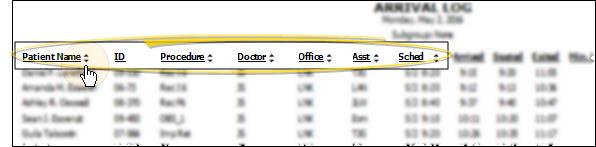
Use Arrows to Re-Sort Report
While viewing certain Edge Cloud reports, you can use the arrow beside certain column headings to re-sort the report according to that column's criteria. Click the arrows a second time to sort that column in reverse order, or click the arrows beside a different column to change the sort order again. (Not all Edge Cloud reports support this feature. If your cursor changes to look like a hand, the feature is available.)
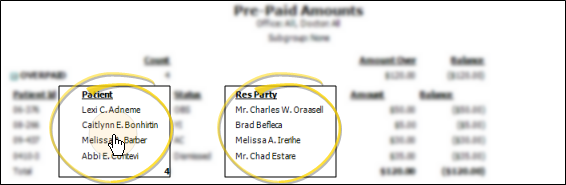
Open the Patient Folder / Responsible Party Record
While viewing some Edge Cloud reports, you can click a patient name or responsible party name to open that record. Not all Edge Cloud reports support this feature. If your cursor changes to look like a hand, the feature is available.
Get Detailed Report Description
Click the icon to the right of the View button to open the help article with the detailed description of the report.
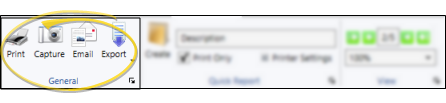
Choose the Output
With the results on your screen, you can choose the output with the toolbar at the top of the report window. See "Report Output Options" for details.
Report Details and Calculations
Amt Due - This column is the total amount due for that contract line. This amount is broken down further into the respective aging columns. When you run the report for a date in the past, the amount due results are calculated from that date, not from "today".
Days – This column tells you the highest number of days past due on any outstanding charges for the contract.
Last Amt and Received – These columns list the amount and date of the last payment posted to the contract.
Past Due Calculations - The account aging is calculated from the date you selected in the report settings, not necessarily today.
Last Page – The last page of the report includes totals for the number of patient contracts listed, amount due, amounts in each of the 0 – 30, 31-60, 61-90, and 91+ days past due categories, and the account balances.